Clicker Timing: How Fast Should You Click?
Click while the behavior is happening, not after it. Your dog links the click to whatever they were doing when they heard it, so a late click marks the wrong thing. In lab tests, young adults press a button about 0.2 seconds after a simple, expected signal. Marking a real dog takes longer, because you also have to decide.
What you need
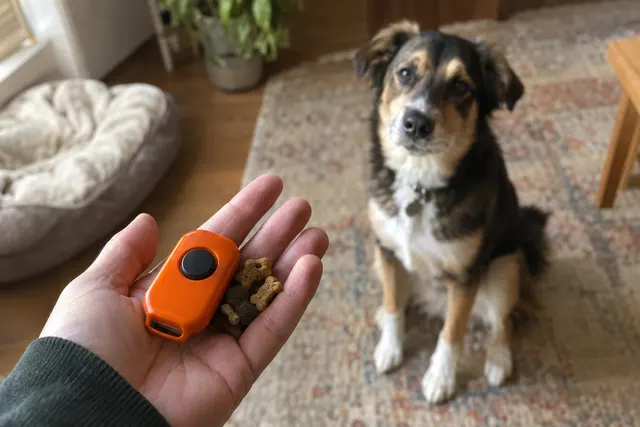
- A clicker, a marker word, or the Sit AI app
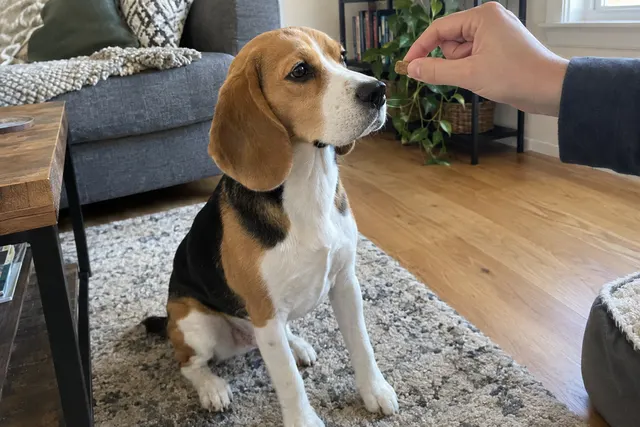
- Small, soft treats in a pouch
- An iPhone or other phone that records slow-motion video
- A tennis ball for practice without your dog
- A clear idea of the exact moment you want to mark
Marker delay: Marker delay is the time between the moment your dog does the behavior and the moment they hear the click.
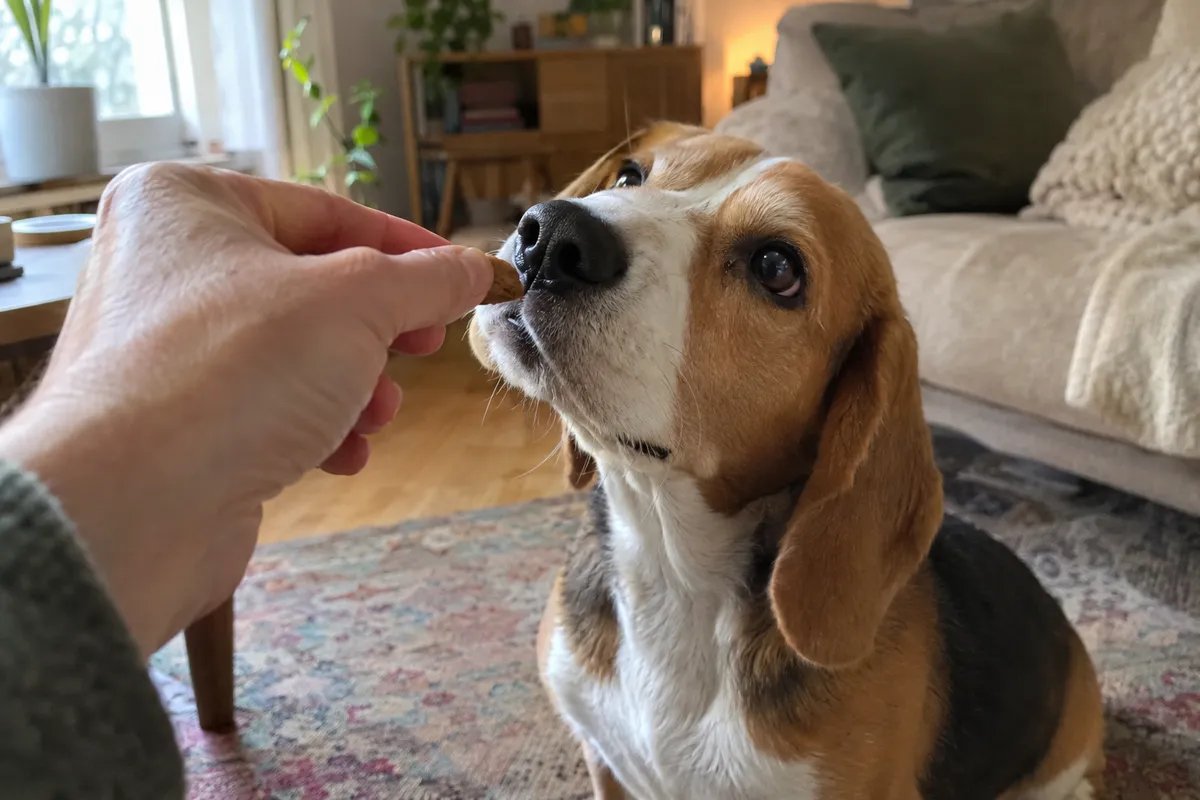
Reward delay: Reward delay is the time between the click and the treat reaching your dog, and it can be a little longer because the click has already marked the moment.
Simple reaction time: Simple reaction time is how long a person takes to respond to a single expected signal when there is no decision to make.
Step by step
Know why the timing matters
Your dog connects the click with whatever their body was doing when the sound reached them. A dog's sit can last less than a second before they stand, sniff or look away, so a click that is half a second late can land on the getting up. Karen Pryor Clicker Training puts it simply: the click should happen at the same time as the behavior.
Know what the research says about people
In a study of 1,469 adults, Woods and colleagues (2015) measured simple visual reaction time at about 231 ms, or 213 ms after correcting for computer delay. That is the best case: one expected signal, one button. When people had to identify what they saw and choose between responses, the same group measured about 550 ms on average. Marking a dog is closer to the second task, since you have to decide whether that was a real sit.
Decide your exact criterion before you start
Say it to yourself: “I click when the rear touches the floor.” A vague goal like “a nice sit” forces you to decide in the moment, and deciding is what slows people down. One clear criterion per session is enough.
Watch the lead-up, not just the result
Before a sit, most dogs shift their weight back and their head tips up. Learn your dog's pattern so you are ready when the rear starts to drop. Don't click on the way down, though. An early click marks a half-sit.
Click first, then move your treat hand
Keep your treat hand still until after the click. If your hand moves first, your dog learns that the hand movement is the real signal, and the click becomes noise. Then deliver the treat within about 2 seconds.
Practice without your dog
Drop a tennis ball and click the instant it hits the floor. Do 10 drops a day for a few days. It costs your dog nothing and trains the same hand-eye skill.
Measure your own marker delay
Film a session in slow motion from the side with the sound on. Step through the frames and count from the first frame where the rear is down to the frame where you hear the click. You will see exactly how late you are, and it is usually later than it feels.
Timing
Mark the behavior as it happens: for a sit, the instant the rear touches the floor. The treat can follow within about 2 seconds; FOUR PAWS advises no more than 2 to 3. Keep sessions to 3 to 5 minutes, two or three a day, and on an easy behavior aim for a click every 5 to 10 seconds so your dog stays in the game.
Common mistakes
- Clicking at the end of the behavior. Waiting until you are sure the sit was good often means clicking as your dog gets up. Your dog then learns that sitting and popping up is the trick.
- Clicking early on a guess. Anticipating is useful, but a click while the dog is still lowering marks a hover. If your dog starts sitting halfway, you are probably clicking early.
- Reaching for the treat before the click. When your hand moves first, the hand becomes the marker. Your dog stares at your pouch instead of thinking about their body. Click, then reach.
- A long gap before the treat. The click buys you a moment, not a minute. If the treat takes 5 seconds to arrive, your dog has done several other things by then. Keep treats ready and aim for about 2 seconds.
- Fixing a late click with another click. Two clicks for one sit muddle the signal. If you were late, give the treat anyway and get the next rep right.
- Waiting for the perfect rep. If you only click flawless sits, your dog may go 30 seconds without a click and give up. Click good-enough reps at a high rate first, then raise the bar a little at a time.
Troubleshooting
| If your dog… | Try this |
|---|---|
| If your dog sits and pops straight back up | You may be clicking as the rear lifts, or handing the treat over too high. Click the instant the rear lands, and bring the treat to your dog's mouth while they are still sitting. |
| If your dog hovers in a half-sit | You are probably clicking on the way down. Wait until the rear is fully on the floor, even if that costs you a fraction of a second. |
| If your dog watches your hand instead of offering the behavior | Your hand is moving before the click. Keep treats in a pouch behind your hip, freeze, click, then reach. |
| If your dog offers a different behavior right after the click | Your click is landing on what came next, such as lying down or looking away. Film a few reps in slow motion and check where the click falls. |
| If your dog loses interest halfway through a session | Your rate of reinforcement has dropped. Make the task easier so you can click every 5 to 10 seconds, use a better treat, and end the session sooner. |
| If your timing falls apart when you are tired or holding a phone | Train when you can give your dog full attention, even if it is only 3 minutes. Put the phone down or let it do the clicking, and keep the leash out of your clicker hand. |
By age
- Puppy (8 to 16 weeks)
- Puppies sit for a split second and bounce up, which leaves almost no window. Lower your criterion: click any rear touching the floor. Keep sessions to 1 or 2 minutes.
- Adolescent (about 6 to 18 months)
- Teenage dogs are quick and impulsive, so pop-ups are common. Click as the rear lands and deliver the treat low, at nose height, so staying down pays.
- Adult
- Many adults sit more slowly and deliberately, which gives you more time. If your adult dog already has a sloppy sit, film it once to see whether your clicks are landing early or late.
- Senior
- Older dogs often lower themselves slowly. Wait until the rear is fully down before you click, and don't rush them, since a stiff dog needs the extra time.
What to work on next
Once your clicks land on time for sit, try a behavior that is harder to time, such as a down or a paw lift for shake. If you are new to the clicker, start with our clicker training guide, and read the marker training guide if you would rather use a word.
How Sit AI helps
For sit, Sit AI handles the timing for you. The camera sees the sit and plays the marker in about 0.2 seconds in our own iPhone tests, every rep, even on tired days. That frees you to focus on the treat and your dog. The app also scores each session, so you can see whether your timing changes are paying off.
When to get help
If your dog seems confused or stressed in training even when your timing looks good, a certified trainer (CPDT-KA or KPA-CTP) can watch a session and spot what you can't see from where you stand. See your vet if your dog has become slow or reluctant to sit, because pain can look like a timing problem.
FAQ
How fast should I click?
As the behavior happens. In practice that means within a fraction of a second of the moment you chose to mark. Lab studies show people need about 0.2 seconds to react to a simple signal and longer when they must decide, so pick one clear moment to watch for.
Will one late click ruin my training?
No. Karen Pryor Clicker Training notes that timing mistakes won't undermine training in the long run. What matters is the pattern. If most clicks land on the right moment, your dog will work it out. Give the treat after a late click and get the next one right.
How long can I wait before giving the treat?
About 2 seconds is a good target, and FOUR PAWS suggests no more than 2 to 3 seconds. The click marks the moment, so the treat doesn't need to be instant. A long delay lets other behaviors creep in between the click and the food.
Is Sit AI faster than a person?
In our own measurement on iPhone, Sit AI takes about 0.2 seconds from camera frame to sound. That is close to the best human simple reaction time, not dramatically faster. The real difference is consistency: the app doesn't hesitate over the decision, get tired, or need a free hand.
Sources
- Woods et al. (2015), Factors influencing the latency of simple reaction time, Frontiers in Human Neuroscience
- Woods et al. (2015), Age-related slowing of response selection and production in a visual choice reaction time task, Frontiers in Human Neuroscience
- FOUR PAWS: Clicker and Marker Signals in Animal Training, Tips and Best Practices
- Karen Pryor Clicker Training: Why Is Clicker Training Effective?