How to Teach a Dog to Sit
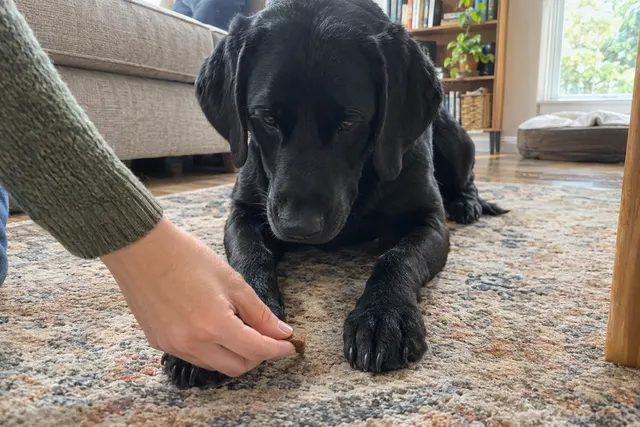
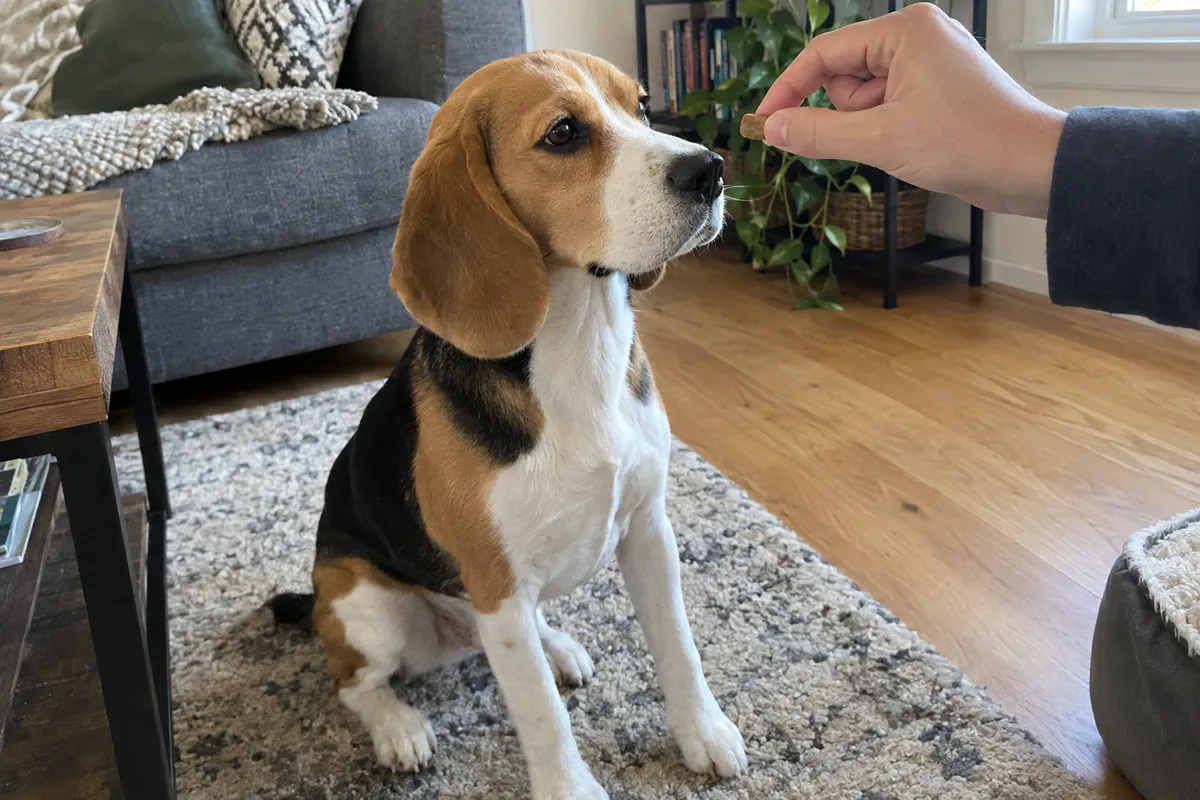
Hold a small treat at your dog's nose and move it slowly up and back over the head. As the head rises, the rear drops. Mark the instant the rear touches the floor with a click or "Yes", then treat. Most dogs follow the lure in the first session and sit on a word within 1 to 2 weeks.
What you need
- 30 to 50 soft treats cut to the size of a pea, or part of your dog's daily food
- A marker: a clicker, a short word like "Yes", or the Sit AI app
- A quiet room with a rug or other non-slip floor
- A timer set to 3 to 5 minutes
Lure: A lure is a treat held at the dog's nose to guide its body into a position.
Marker: A marker is a short, distinct sound, like a click or the word "Yes", that tells your dog the exact moment it did the right thing.
Capturing: Capturing means marking and rewarding a behavior your dog offers on its own, with no lure or help from you.
Step by step
Teach the marker
Click or say "Yes", then hand over a treat. Do this 10 times in a row, and don't ask for any behavior. Your dog learns that the sound means food is coming. You'll know it worked when your dog's head turns to you the moment it hears the sound.
Lure the sit
Stand in front of your dog with a treat pinched at its nose. Move it slowly up and back toward the ears, keeping it about 2 inches above the head. The nose follows up and the rear folds down. If the front feet leave the floor, your hand is too high.
Mark the moment the rear lands
Click the instant the rear touches the floor, then feed at nose level so your dog stays seated. Toss the next treat a step away so your dog stands up again for the next rep. After 5 reps, check: if your dog sat 4 of 5 times, go on to the next step.
Take the treat out of your hand
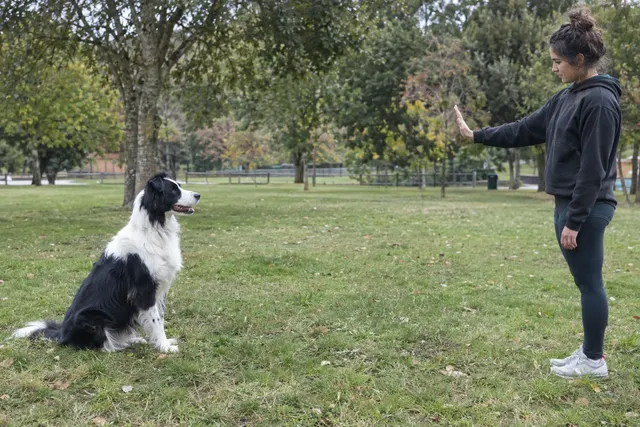
Make the same hand motion with no treat in it. Mark the sit, then pay from your other hand or a pouch. Within 10 to 20 reps the empty-hand motion becomes your hand signal. If your dog stops sitting, use the food lure again for 3 reps, then go back to the empty hand.
Add the word
Say "Sit" once, pause for one second, then give the hand signal. The word has to come first so it starts to predict the signal. After a few sessions, say the word and wait 3 seconds before you help. When your dog sits on the word alone 8 of 10 times, it has learned the cue at home.
Capture sits all day
Keep a few treats in your pocket. Whenever your dog sits without being asked, mark it and reward. This makes sit your dog's default way of asking for things. It's working when your dog sits in front of you at mealtime or at the door without a cue.
Practice in new places
Practice in the kitchen, then the yard, then on a walk. To your dog, each new place is a new lesson, so help with the hand signal again and use better treats. Expect 2 or 3 sessions in each new place before the word works there.
Timing
Mark the instant the rear touches the floor, not when your dog looks at you or starts to get up. Give the treat within 1 to 2 seconds of the mark, while your dog is still sitting. Keep sessions to 3 to 5 minutes, about 10 to 15 reps, and run 2 or 3 sessions a day. Stop while your dog still wants more.
Common mistakes
- Pushing the rump down. Pressing on the back end teaches your dog to brace against your hand, and it can hurt a dog with sore hips. The lure does the work. AKC advises against pushing the hindquarters down.
- Saying "sit" over and over. If you say "Sit, sit, SIT", your dog learns that the first two don't count. Say it once, wait 3 seconds, then help with the hand signal.
- Holding the treat too high. A lure held well above the head makes the dog jump or rear up. Keep it close to the nose and move it back, not up.
- Marking late. If you click as your dog is getting up, you paid for standing. Watch the rear, not the face. The mark goes when the rear touches the floor.
- Feeding after the dog stands. If the treat arrives once your dog is up, it learns to bounce: touch the floor, pop up, eat. Feed while the rear is still down.
- Training in only one room. Dogs don't transfer a skill to new places easily. A dog that sits perfectly in the kitchen may stare blankly in the park. That's normal, not stubbornness. Practice in many places.
Troubleshooting
| If your dog… | Try this |
|---|---|
| If your dog backs up instead of sitting | Your hand is moving too far forward or too fast. Move the treat in slow motion, and practice with your dog's rear near a wall so it can't back away. |
| If your dog jumps up at the treat | Lower your hand so the treat stays about an inch above the nose. If your dog still jumps, close your fist around the treat and open it once all four feet are on the floor. |
| If your dog ignores the treat | Use something better, like small pieces of plain cooked chicken or cheese, and train before a meal, not after. A worried dog may not eat, so move to a quieter room. |
| If your dog sits, then pops right back up | Feed 2 or 3 treats in a row while the rear stays down, then say a release word such as "Free". Your dog learns that staying down keeps the treats coming. |
| If your dog only sits when you hold food | The lure was faded too fast, or not at all. Lure 3 times, then do 3 reps with an empty hand, paying from the other hand each time. Keep alternating until the empty hand works on its own. |
| If your dog sits at home but not outside | Start again in an easy outdoor spot, like your front step, with better treats and the hand signal. Add distractions in small steps, such as across the street from a park before inside it. |
By age
- Puppy (8 to 16 weeks)
- Keep sessions to 1 to 3 minutes and use tiny, soft treats. Puppies sit often on their own, so capture those sits. The puppy sit guide has a full plan by age.
- Adolescent (about 6 to 18 months)
- A sit that was solid at 4 months can fall apart. That's normal at this age. Go back a step, use better treats, and practice in short bursts during walks.
- Adult or rescue
- Adult dogs often learn quickly, but some were pushed into a sit in the past. If your dog flinches when a hand moves over its head, keep the lure low or capture sits instead.
- Senior
- Sitting can be uncomfortable with stiff hips or knees. Use a mat on hard floors and accept a slower sit. A sit that is new, slow or lopsided is worth a vet visit.
What to work on next
When your dog sits on the word in 3 different places, add a short pause: wait one second before you mark, then two. That's the start of stay, which the guide to teaching stay covers step by step. From a solid sit you can also teach down, and the clicker timing guide will help you mark each rep at the right instant.
How Sit AI helps
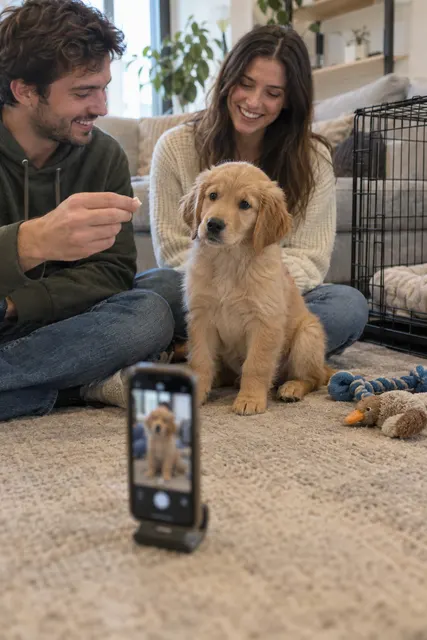
Sit AI is built for exactly this. Prop your iPhone so it can see your dog from the side and start a session. The app watches every rep and tells you, out loud, the moment to give the treat. It counts the sits, scores the session and tells you when your dog is ready for the next step, like adding distance or a new room. You'll see the progress day by day.
When to get help
See your vet if your dog suddenly stops sitting, sits with its legs out to one side, or yelps or hesitates on the way down. These can be signs of hip, knee or back pain, not disobedience. If your dog is afraid of hands near its head, or growls when you lure it, work with a certified trainer or a veterinary behaviorist.
FAQ
How long does it take to teach a dog to sit?
Most dogs follow a lure into a sit in the first session. Sitting on a word alone at home usually takes 1 to 2 weeks of 2 or 3 short sessions a day. Sitting reliably outside, around other dogs and people, takes longer and needs practice in each new place.
Should I use a clicker or a word like "Yes"?
Either works. A clicker sounds the same every time and is quick to use, so many people find it more precise. A word is always with you. Pick one marker for teaching new behaviors, and follow every mark with a reward.
When can I stop giving treats for sit?
Don't stop all at once. When your dog sits on the first cue 8 of 10 times in several places, reward some sits with food and others with praise, play, or something it wants, like the door opening. Keep paying well in hard places.
Why does my dog sit for my partner but not for me?
Dogs notice small differences in voice, posture and hand position. One of you may give a clearer signal or mark faster. Agree on the same word and the same hand motion, and both of you should mark and reward every sit while your dog is learning.