How to Train a Puppy to Sit
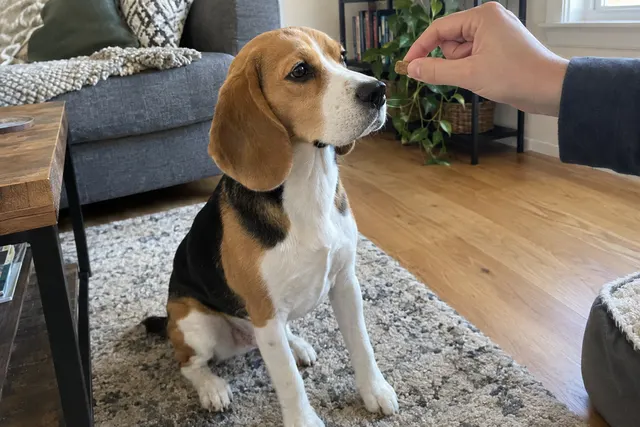
Start at 8 weeks with sessions of 1 to 3 minutes. Hold a tiny treat at your puppy's nose, move it back over the head, and mark the instant the rear touches the floor, then feed. Capture sits all day too. Most puppies sit for a lure within a few days and on a word within 2 to 3 weeks.
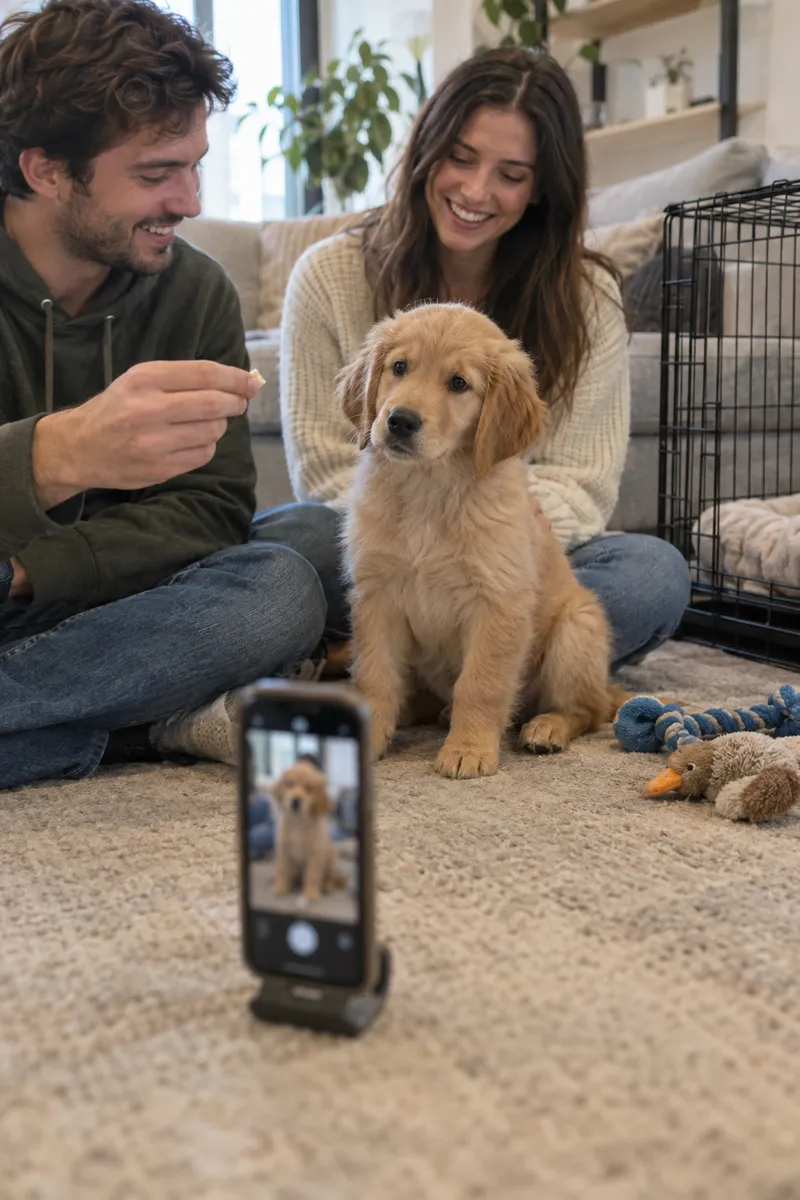
What you need
- Treats no bigger than a pea, or kibble from your puppy's daily ration
- A marker: a clicker, the word "Yes", or the Sit AI app
- A rug or yoga mat so small paws don't slide
- A puppy that has just napped and been out to pee, and is a little hungry
Socialization period: The socialization period is roughly the first 3 months of a puppy's life, when it adapts most easily to new people, animals and places.
Default behavior: A default behavior is what a dog offers on its own when it wants something, without being asked.
Life reward: A life reward is something your puppy wants in daily life, like its food bowl, a toy or the door opening, used as payment for a behavior.
Step by step
Pick the right moment
Train right after a nap and a potty break, and before a meal. A puppy that is overtired, full, or needs to pee can't focus. Count out 20 tiny treats. If your puppy follows your hand and sniffs for the next treat, it's ready.
Teach the marker in one minute
Click or say "Yes" and feed one treat, 8 to 10 times in a row. Your puppy doesn't have to do anything yet. It's working when your puppy's head or ears turn toward you at the sound.
Capture sits first
Stand still and wait. Young puppies sit often on their own, especially when they look up at you. Mark the moment the rear hits the floor and feed. After 5 to 10 captures, many puppies start sitting on purpose to make you mark.
Add a short lure if needed
If sits are slow to come, hold a treat at the nose and move it up and back just past the ears. Puppies are short, so kneel or crouch. Mark the sit, feed at nose level, then toss a treat to reset. Stop after 5 to 10 reps.
Switch to an empty hand
Make the same motion with no treat, and pay from your other hand. Most puppies make the switch in 2 or 3 sessions. If your puppy stares at your empty hand, lure twice more, then try the empty hand again.
Add the word
Say "Sit" once, then give the hand signal. After a few days, say the word and wait 2 to 3 seconds before you help. When your puppy sits on the word 8 of 10 times in one room, start using it in other rooms.
Make sit the way to ask
Ask for a sit before the food bowl goes down, before a door opens, and before you throw a toy. Everyone in the house uses the same word and the same rule. AKC's puppy timeline sets this as a goal by 6 months: your puppy sits to ask for the things it wants.
Timing
Puppies drop and bounce back up fast, so mark the instant the rear lands. A late mark pays for the bounce. Feed within 1 to 2 seconds, at nose level. Keep sessions to 1 to 3 minutes, about 5 to 10 reps, and spread 3 to 5 of them through the day, for example before each meal.
Common mistakes
- Sessions that run too long. A 10-minute session with a 10-week-old puppy often ends with a frantic, bitey puppy. Three 2-minute sessions work better than one 10-minute session.
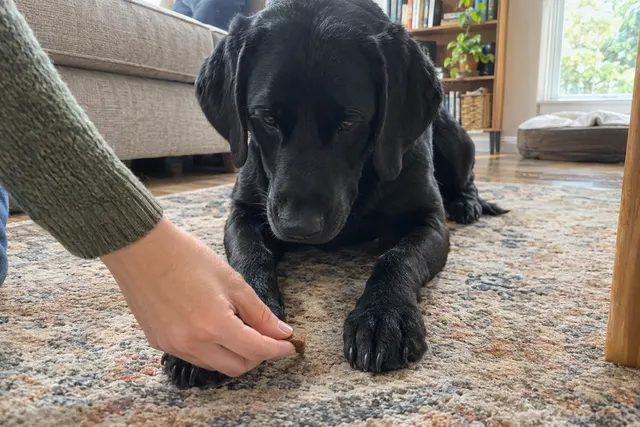
- Treats that are too big. A large biscuit takes a puppy a long time to chew and fills it up after a few reps. Use pieces the size of a pea or smaller, and take them out of the day's food.
- Training on a slippery floor. Puppies slide on hardwood and tile, and some avoid sitting there. Train on a rug or a yoga mat.
- Pushing the puppy's bottom down. It teaches your puppy to resist your hands and puts pressure on growing joints. Lure or capture instead.
- Different words from different people. "Sit", "Sit down" and "Sitty" are three different cues to a puppy. Agree on one word and one hand signal for the whole family.
- Waiting for vaccines before training. Training at home can start the day your puppy arrives. AVSAB says puppies can start socialization classes at 7 to 8 weeks, once they've had at least one set of vaccines 7 days before the first class.
Troubleshooting
| If your dog… | Try this |
|---|---|
| If your puppy bites your fingers when you lure | Pinch the treat so only a sliver shows, or feed from a flat open palm. Train after a nap, not when your puppy is wound up. If the teeth keep coming, end the session and hand over a chew toy. |
| If your puppy jumps at your hand | Your hand is too high for a short puppy. Kneel down and keep the treat an inch above its nose. Move it back toward the ears, not up. |
| If your puppy lies down instead of sitting | Your hand is going down or forward. Move it straight back over the head. If your puppy still lies down, it may be tired, so train earlier, closer to waking up. |
| If your puppy loses interest after 3 reps | Stop at 3 and try again in an hour. Next time, use a tastier treat and train before a meal. Ending early beats training a puppy that has stopped listening. |
| If your puppy sits for you but not for the kids | Children tend to hold treats high and move fast. Have them kneel, keep the treat at the puppy's nose, and move slowly. You can say the marker for them at first. Always supervise. |
| If your puppy sits, then leaps at the treat | Feed low, toward the chest, so the head stays down and the rear stays put. Then toss the next treat a step away to reset for the next rep. |
By age
- 8 to 10 weeks
- Lean on capturing. Sessions of 1 to 2 minutes, with lots of easy wins. Your puppy is learning that training is fun as much as it's learning sit.
- 10 to 16 weeks
- Switch to the empty-hand signal and add the word. This is still the socialization period, so practice sit in new, safe places: a friend's kitchen, a quiet porch, puppy class.
- 4 to 6 months
- Adult teeth are coming in and mouthing peaks for many puppies. Hand over a chew after each session. Sessions can stretch to 3 to 5 minutes.
- Adolescent (about 6 to 18 months)
- Sits that were solid can slip. Keep asking for sit before meals, doors and play, and pay well around distractions. Follow the adult sit guide from here.
What to work on next
When your puppy sits on the word in 3 rooms, start adding a one-second pause before you mark. That's the first step toward stay. Then teach down from the sit. For a full adult plan with more fixes, see the guide to teaching a dog to sit, and read the puppy biting guide if hands are getting nipped during training.
How Sit AI helps
Puppies sit and pop up fast, so knowing when to treat is half the battle. With your iPhone propped to see your puppy, Sit AI watches each rep and tells you the moment to reward. It keeps sessions short for young dogs, scores each one, and saves clips, so you can watch your puppy's sit get faster week by week.
When to get help
Talk to your vet if your puppy avoids sitting, sits with its back legs splayed to one side, or yelps when its back end is touched. Joint problems can show up early. If your puppy freezes, hides or growls during gentle handling or training, get help from a certified trainer or veterinary behaviorist early, while the socialization period is still open.
FAQ
What age can a puppy learn to sit?
As soon as it comes home, usually at about 8 weeks. AKC says training can start that early when you use positive reinforcement. Keep sessions to 1 to 3 minutes and use tiny treats. At this age you're teaching the position, not long holds.
How many times a day should I train my puppy?
Aim for 3 to 5 short sessions of 1 to 3 minutes, plus capturing sits whenever they happen. Several brief sessions work better than one long one for a young puppy's short attention span.
Should I train with kibble or treats?
Kibble from the daily ration works well at home with a hungry puppy. Use softer, smellier treats in new places or around distractions. Either way, reduce meals to make up for what you use in training.
My puppy knew sit last week and now ignores it. Is that normal?
Yes. Puppies lose a new skill when they're tired, distracted, or in a new place, and many slip again as adolescence starts at around 6 months. Go back one step: lure a few reps, train in a quiet room, and use better treats.