How to Teach a Dog to Shake
Ask your dog to sit, hold a treat in your closed fist near their chest, and wait without talking. When a paw lifts and touches your hand, mark it and give a treat from your other hand. Then switch to an open, empty palm. Add the word “shake” once the paw comes every time.
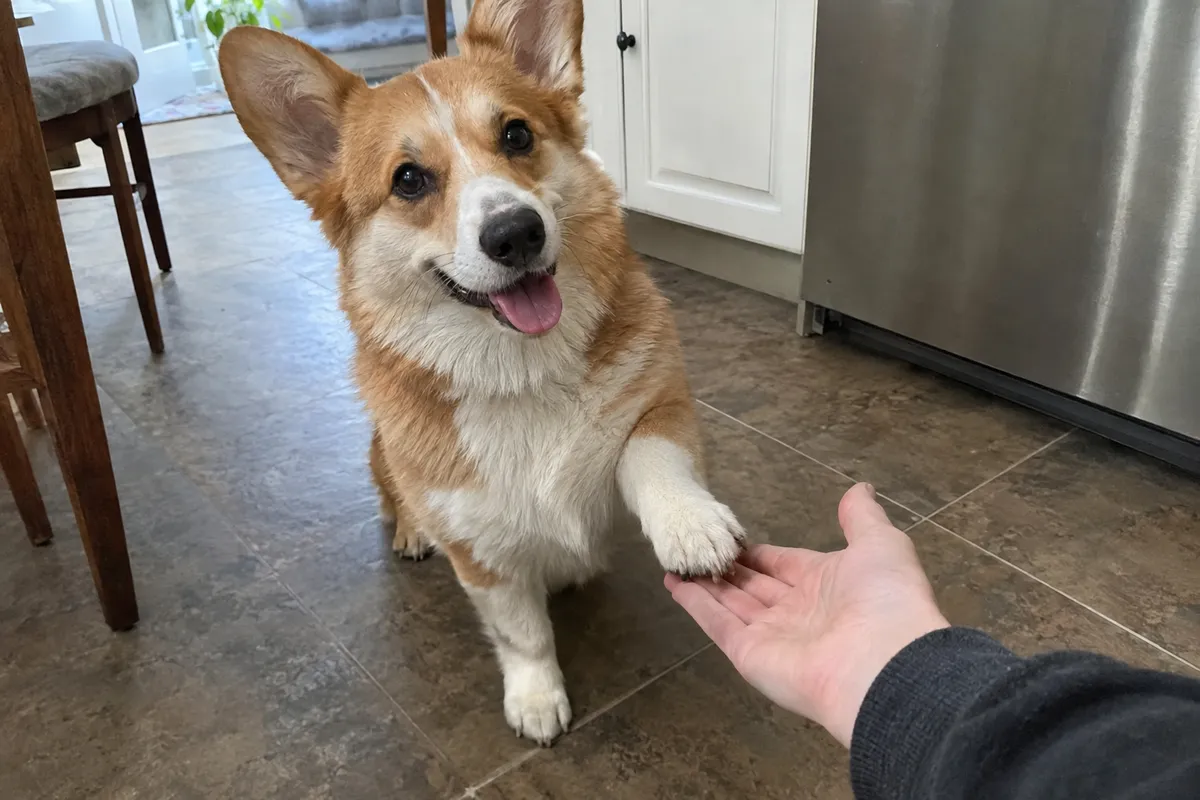
What you need
- Small, soft treats
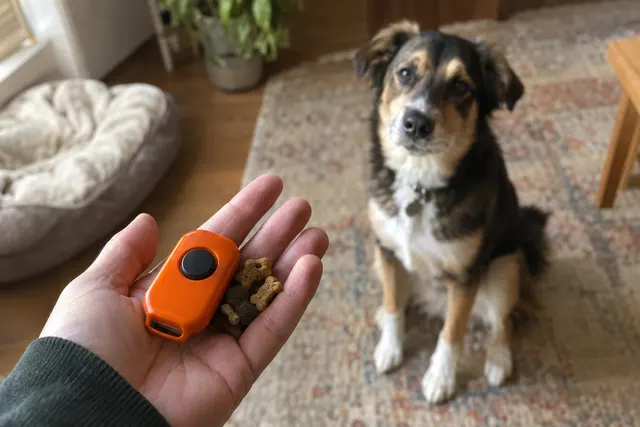
- A clicker, a marker word, or the Sit AI app
- A dog who can hold a sit for a few seconds (it helps, but isn't required)
- A non-slip floor so your dog can balance on three legs
Shake: Shake is a trick where your dog lifts a front paw and rests it in your open hand on cue.
Fading a lure: Fading a lure means removing the food from your signaling hand in small steps until the hand signal alone predicts the behavior.
Step by step
Start with a sit
Kneel or sit on the floor facing your dog and ask for a sit. A seated dog finds it easier to lift a front paw. If your dog doesn't sit yet, you can still try this standing, but expect more wobbling.
Wait for the paw
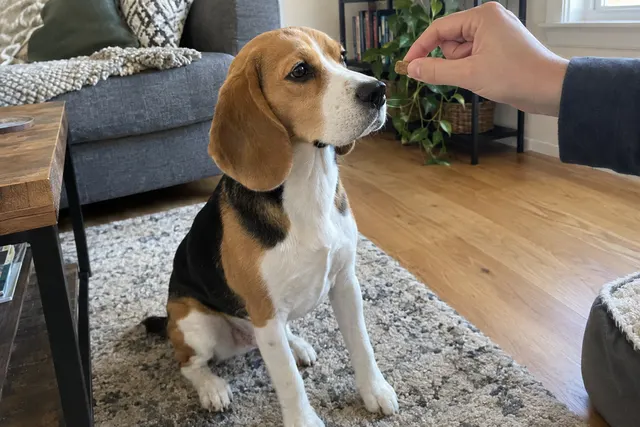
Hold a treat in a loosely closed fist at the height of your dog's chest, a little toward one front leg. Say nothing. Most dogs sniff, lick, then paw at the fist. Mark the instant a paw touches your hand, and give a treat from your other hand.
Pay from the other hand
Never open the fist your dog is pawing at. If digging at the fist makes the food come out, your dog learns to dig harder. The paying hand is always the other one.
Ask for a clear touch
After 5 or so reps, mark only clear paw touches, not small weight shifts. Then wait a beat so the paw rests on your hand for about a second before you mark.
Switch to an open, empty hand
Hold your hand out flat, palm up, with no treat in it, in the same spot. Mark when the paw lands and pay from the other hand. If your dog stalls, put the treat back in the fist for two reps, then try the open hand again.
Add the word
Once your dog puts their paw in your open hand every time you offer it, say “shake” just before you hold out your hand. Mark and pay as usual. Say it once.
Teach the other paw and take it on the road
Teach the second paw as its own trick with its own word, like “other paw”. Then practice in new rooms and outside. Let other people try only if your dog is relaxed with them.
Timing
Mark the moment the paw touches your hand, not when it drops back down. Pay from your other hand within about 2 seconds. Sessions of 2 to 3 minutes with 5 to 10 reps are plenty, since holding a paw up is more tiring than it looks.
Common mistakes
- Picking up the paw for your dog. Lifting the paw teaches your dog to tolerate it, not to offer it. The AKC advises against manipulating the paw. Wait for your dog to work it out.
- Rewarding hard scratching. If you mark every rake across your hand, you can end up with a dog who swipes hard. Mark the gentler touches, and keep your dog's nails trimmed.
- Paying from the fist being pawed. Opening that fist rewards digging at it. Always pay from the other hand.
- Saying “shake” over and over too early. If you repeat the word while your dog is still guessing, it becomes background noise. Add the cue only once the paw comes reliably.
- Holding your hand too high. A hand above your dog's head invites standing up or jumping. Keep it at chest height, close to the paw you want.
- Accepting either paw at random. Dogs don't automatically treat left and right as the same trick. The AKC suggests teaching each paw separately: offer your hand near one paw and pay only that one.
Troubleshooting
| If your dog… | Try this |
|---|---|
| If your dog licks or noses your fist but never lifts a paw | Wait a little longer, and lower your fist a few inches toward the floor near one paw. If your dog still doesn't paw, mark any shift of weight off that leg, then any small lift, and build from there. |
| If your dog lies down instead | Your hand is probably too low. Raise it to chest height and start each rep from a fresh sit. Don't mark the down. |
| If your dog now paws you all the time | Pawing has paid off. Don't respond to pawing you didn't ask for. Look away for a moment, then ask for a sit and reward that. Once “shake” is on cue, only cued paws earn anything. |
| If your dog pulls away when their paw touches you | Some dogs dislike having their feet touched. Don't close your fingers around the paw. Let it rest on your flat palm for a split second, mark, and pay. If your dog stays uneasy, ask your vet whether the paw or leg hurts. |
| If your dog stands up or jumps at your hand | Lower your hand and move it closer to your dog. Mark faster, so the paw lift pays before your dog has time to stand. |
| If your dog offers the wrong paw | Don't correct it. Just don't pay it, and offer your hand again near the paw you want. The AKC suggests holding your right hand out to ask for the left paw. |
By age
- Puppy (8 to 16 weeks)
- Puppies paw readily, so this trick is often fast. Keep sessions to 1 or 2 minutes, and mark soft touches rather than scratches.
- Adolescent (about 6 to 18 months)
- Teenage dogs may already paw for attention. Teach shake on cue now, and stop rewarding uncued pawing at the same time.
- Adult
- Dogs who rarely use their paws may need you to shape the lift in small steps. Others offer a paw in seconds.
- Senior
- Balancing on three legs is harder with sore shoulders or elbows. Keep reps few, let your dog do it lying down if that is easier, and stop if they seem reluctant.
What to work on next
Once shake is solid, teach the other paw, then high five and wave by moving your hand a little higher each session. If your dog's sit is still shaky, work on that first; roll over is a good next trick once your dog knows down.
How Sit AI helps
Shake starts from a calm sit. Sit AI coaches that sit for you: it watches each rep, tells you when to treat and tracks how solid it is. A dog with a reliable sit picks up paw tricks faster. The camera doesn't track the paw itself.
When to get help
See your vet if your dog limps, licks one paw a lot, flinches when a foot is touched, or suddenly won't lift a paw it used to offer. If your dog growls or snaps when their paws are handled, including at nail trims, work with a certified trainer (CPDT-KA or KPA-CTP) or a veterinary behaviorist.
FAQ
How long does it take to teach a dog to shake?
Many dogs offer a paw in the first session, because pawing comes naturally. Getting a clean shake on cue in different places usually takes a few more short sessions. Dogs who rarely use their paws may need a week or so of shaping.
What is the difference between shake and high five?
In a shake the paw rests in your palm, which faces up or sideways. In a high five the paw meets your raised palm, which faces your dog. Teach shake first, then raise and turn your hand a little at a time.
Will teaching shake make my dog paw at people?
It can if pawing pays off outside training. Only reward paws you asked for, and greet guests after a sit, not a paw. Once the trick is on cue, most dogs learn the difference.
Can puppies learn to shake?
Yes. Many puppies paw a lot anyway, so shake is an easy early trick. Keep sessions to a minute or two and don't let puppies scratch hard, since their nails are sharp.