How to Teach a Dog to Roll Over
Start with your dog lying down on a soft surface. Hold a treat at their nose and move it slowly toward their shoulder so they flop onto one side, then mark and reward. Next, move the treat over their backbone so they roll all the way over. Add “roll over” once they follow your hand smoothly.
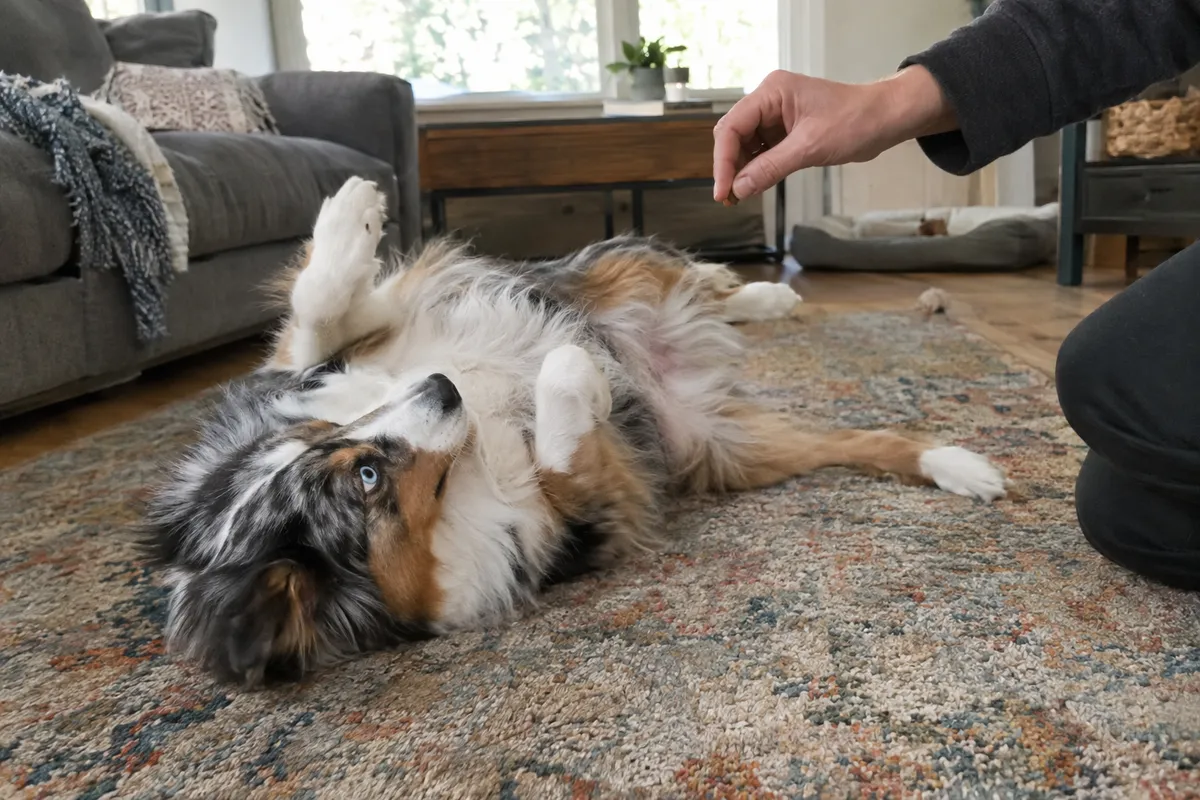
What you need
- A dog who already lies down on cue
- A rug, a yoga mat or soft grass
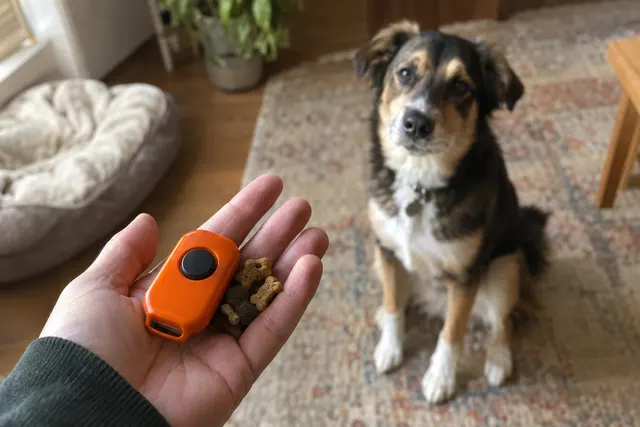
- Small, soft treats your dog will follow closely
- A clicker or a marker word like "Yes"
- A training time before a meal, not straight after one
Roll over: Roll over is a trick where a dog lying down rolls across their back from one side to the other and ends up lying down again.
Splitting: Splitting means breaking a behavior into small pieces and rewarding each piece before asking for the whole thing.
Step by step
Check it is right for your dog
Roll over twists the spine and puts weight on the back. Ask your vet first, or teach a different trick, if your dog has back, neck or hip problems, has had spinal or orthopedic surgery, or is a long-backed breed with a history of disc trouble. Train on a rug or grass, and before meals rather than after.
Ask for a down
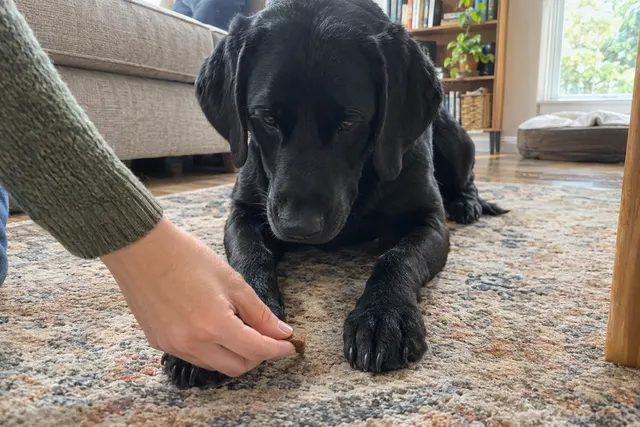
Start with your dog lying down in front of you, with you kneeling at their side. The AKC also starts roll over from a down. A dog who is sitting or standing has too far to go.
Get the hip flop
Hold a treat right at your dog's nose and move it slowly back toward one shoulder. Most dogs shift their weight and flop onto one hip. Mark that moment and give the treat. Do 3 to 5 reps.
Get your dog flat on their side
Keep moving the treat toward the shoulder blade until your dog's head turns and they lie flat on their side. Mark and reward while they are still lying there. Repeat until this is relaxed and quick.
Over the back
From the side-lying position, move the treat slowly over your dog's backbone toward the floor on the other side. Mark the moment they are on their back, then keep the lure going so they finish the roll. Many dogs hesitate here, so go slowly and reward small progress.
Fade the lure
Once your dog follows the treat all the way around, do the same hand circle with no food in it, mark the finished roll, and pay from your other hand. Make the circle a little smaller each session until a small sweep of your hand is enough.
Add the cue
Say “roll over” just before you give the hand signal. Mark and reward the full roll. After a few sessions, say the cue and pause before the hand signal to see if your dog starts the roll on the word alone.
Timing
Mark each piece as it happens: the hip flop, then lying flat on the side, then the moment your dog is on their back, then the finish. Reward within about 2 seconds, and deliver the treat while your dog is still lying down. Keep sessions to 2 or 3 minutes with a few reps per piece, because rolling is physical and many dogs tire of it quickly.
Common mistakes
- Pushing your dog over. Rolling a dog by hand can frighten them, especially onto their back, and it teaches them nothing about doing it themselves. Use the treat and patience, not your hands.
- Moving the treat too fast. If the lure leaves your dog's nose, your dog stands up to chase it. Keep the treat almost touching their nose and move at the speed they can follow.
- Starting from a sit or stand. From a sit, most dogs just turn their head or stand up. Start every rep from a relaxed down.
- Training on a hard, slippery floor. Bony spines and hips on tile are uncomfortable, and a dog who slides won't want to try again. A rug or grass makes a big difference, especially for large dogs.
- Skipping the side-lying step. Going straight for the full roll asks too much at once. A dog who is relaxed lying flat on their side is far more likely to go over the top.
- Doing too many rolls. Ten rolls in a row is a lot of work. Three to five good reps, then something easy, then stop.
Troubleshooting
| If your dog… | Try this |
|---|---|
| If your dog stands up when you move the treat | The treat moved away from their nose or went too high. Slow down and keep it low and close. If your dog still pops up, go back to rewarding the hip flop for a few reps. |
| If your dog lies on their side but won't go onto their back | Lying on the back is a vulnerable position and many dogs need time. Reward relaxed side-lying, then reward any small tilt toward the back. Never push. If your dog stiffens or seems uncomfortable every time, ask your vet to check their back and hips. |
| If your dog only rolls one way | That is common. Let your dog roll in their preferred direction until the trick is solid, then teach the other side separately if you want it. |
| If your dog jumps up as soon as you mark | Deliver the treat to their mouth while they are still lying down, so staying low pays. Mark, then feed on the floor. |
| If your dog yelps, groans or seems stiff | Stop training this trick and see your vet. Pain can be the reason a dog suddenly refuses roll over or can only do part of it. |
| If your dog gets mouthy and grabs at the treat hand | Use a lower-value treat and hold it in a closed hand with just a corner showing. Pause the session if your dog gets wound up, and try again when they are calmer. |
By age
- Puppy (8 to 16 weeks)
- Teach down first. Puppies are floppy and often flop onto a hip on their own, so you can capture that and build on it. Keep sessions to 1 or 2 minutes on a soft surface.
- Adolescent (about 6 to 18 months)
- Teenage dogs may treat the lure as a game and leap for it. Train after a walk, when your dog is calmer, and use smaller, lower-value treats.
- Adult
- Big and deep-chested dogs can find rolling across the spine awkward on a hard floor. Give them a thick rug or grass, and accept a slower roll.
- Senior
- Ask your vet before teaching this one. Lying flat on one side on a soft bed, cued as “settle” or “side”, is a kinder trick for older joints.
What to work on next
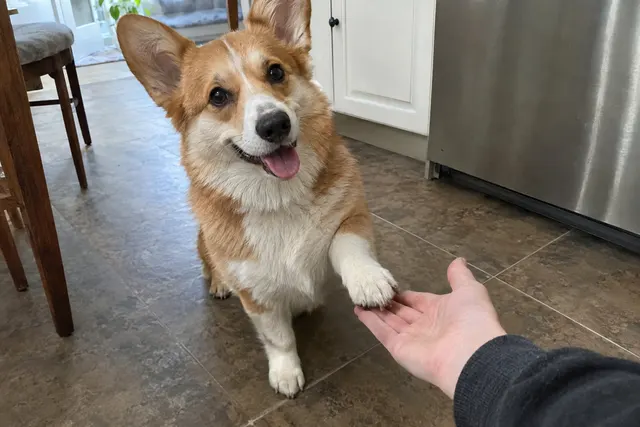
Once your dog rolls on the word alone, practice in new places on soft ground, then try play dead by stopping the roll halfway, with your dog on their side. If down isn't solid yet, start with our guide to teaching down, and shake is an easier trick for days your dog isn't up for rolling.
How Sit AI helps
Roll over is built from sit and down. Sit AI coaches sit today, with down on the way: it watches each rep, tells you when to treat and shows you when the foundation is solid enough to start tricks. The camera doesn't track the roll itself.
When to get help
See your vet if your dog yelps, groans, stiffens or refuses to lie on one side, or if they used to roll over and suddenly won't. If your dog freezes, growls or snaps when guided toward their back, stop and work with a certified trainer (CPDT-KA or KPA-CTP) or a veterinary behaviorist.
FAQ
How long does it take to teach a dog to roll over?
Most dogs need several short sessions over a week or two. A dog who lies down easily and relaxes on their side may get the full roll in a few days. Dogs who don't like being on their back take longer, and that is fine.
Is roll over bad for dogs?
For most healthy dogs on a soft surface it is a harmless trick. It is not a good choice for dogs with back, neck or hip problems, or after surgery. Ask your vet if you are unsure, and choose a different trick if your dog seems uncomfortable.
Why won't my dog roll onto their back?
Usually because it feels vulnerable or uncomfortable. Hard floors, a fast lure or skipping the side-lying step make it worse. Slow down, reward smaller pieces, and get a vet check if your dog always stops at the same point.
What age can a puppy learn to roll over?
Puppies can start as soon as they lie down reliably on cue. Keep it to two or three rolls per session on a soft surface. Young puppies are flexible, but they tire quickly.