What Is Marker Training for Dogs?
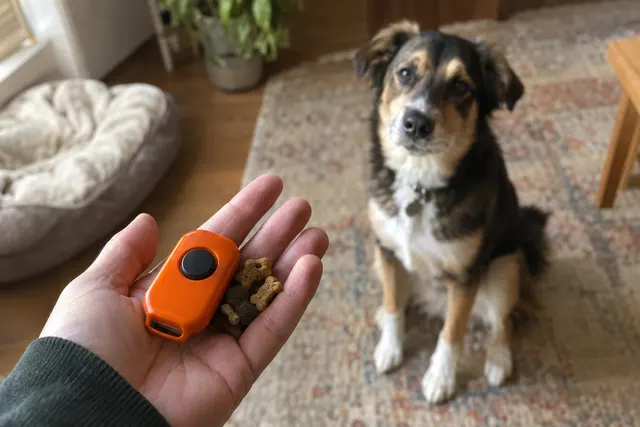
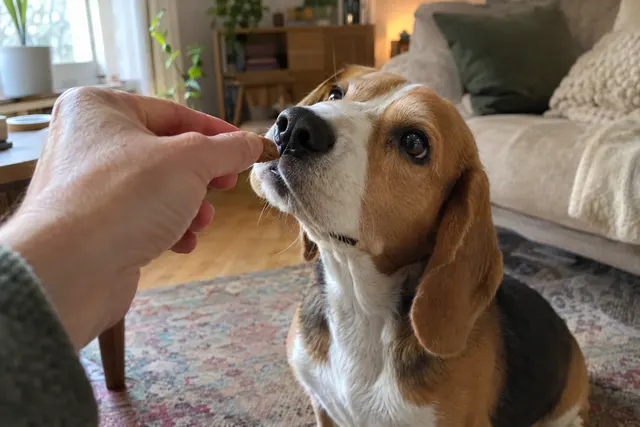
Marker training is a reward-based method where a short, distinct signal, such as a click or the word “yes”, tells your dog the exact moment they got it right. A reward always follows. The marker is not the reward and not a command. It is information: “that, exactly, and food is coming.”
What you need
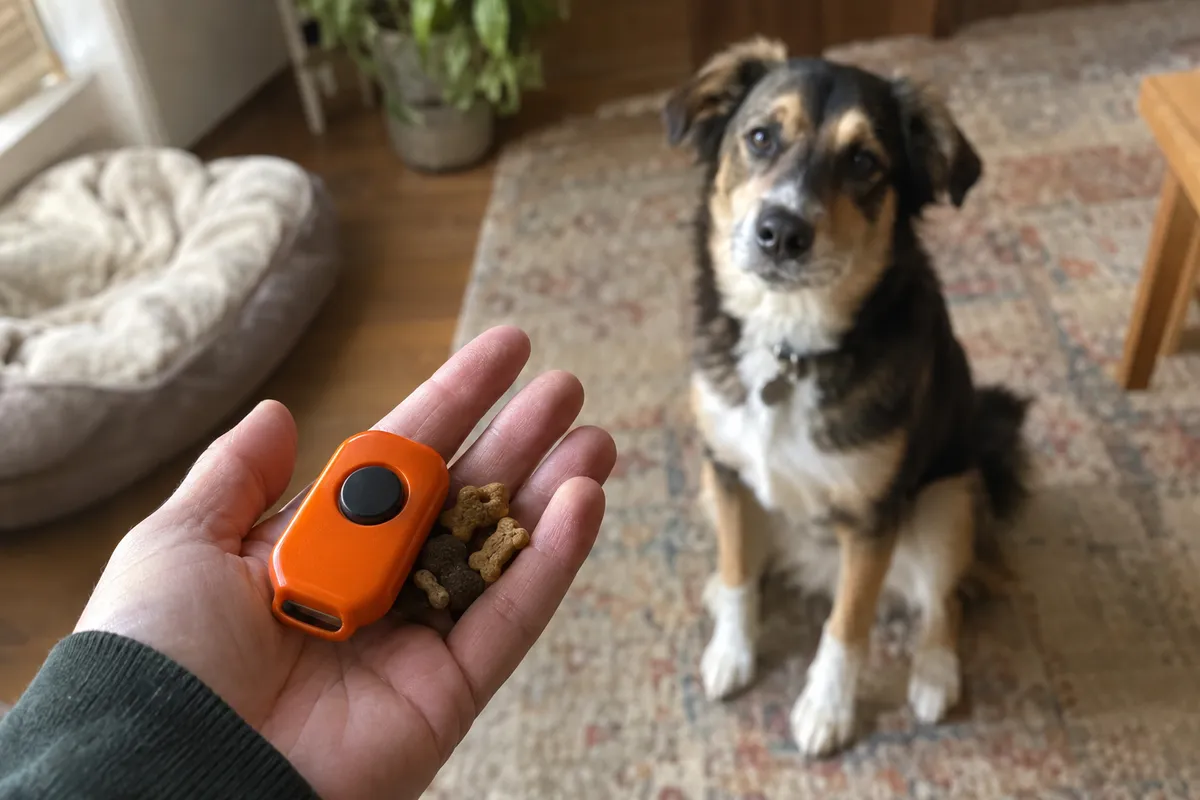
- One marker: a clicker, or a short word you rarely say otherwise
- Small, soft treats your dog loves
- A quiet room for the first sessions
- Agreement from everyone in your home to use the same marker
Marker: A marker is a short, consistent signal that tells a dog the exact moment they did the right thing and that a reward is coming.
Lure: A lure is food or a toy your dog follows into position before the behavior happens, like a treat moved over their nose to guide a sit.
Reward: A reward is the thing your dog actually wants, such as food, play or a walk, and in marker training it comes after the marker.
Step by step
Choose your marker
Pick a clicker or one short word. “Yes” is popular, but you say it all day, so some people pick a rarer word like “yip” or “bingo”. Whatever you choose, use only that one for marking.
Charge it
Say your word, then give a treat, 10 to 20 times with random pauses. Don't ask for any behavior yet. When your dog's head turns to you as soon as they hear the word, it is working.
Say it the same way every time
A marker word works best in a steady, neutral tone. If it sounds excited one time and flat the next, your dog has to work out whether it is the same signal. Short and level beats loud.
Mark, then move
Freeze, mark, then reach for the treat. If your hand moves first, your dog learns to watch your hand instead of listening for the marker.
Use a lure only to get started
A lure is fine for the first few reps of a new behavior. After 3 to 5 lured reps, make the same hand motion with no food in it, mark the behavior, and pay from your other hand. Lures that stay in too long turn into bribes your dog waits for.
Treat the marker as the end of the rep
Most trainers use the main marker as a terminal marker: once your dog hears it, the behavior is over and they can break position to get the reward. If you need your dog to hold a position, build duration a second at a time and mark at the end, rather than marking repeatedly in the middle.
Fade the marker once the behavior is learned
When your dog does the behavior on the first cue in a few different places, you don't need to mark it anymore. Switch to praise and occasional rewards, and save the marker for the next new thing.
Timing
Say or click the marker as the behavior happens, then deliver the reward within about 2 seconds. Keep still when you mark, and move your treat hand only afterward. Early sessions of 3 to 5 minutes, two or three times a day, are plenty.
Common mistakes
- Using the marker as praise. “Yes, good boy, yes, yes!” turns the marker into chatter. Say it once, at the moment that counts, and save the praise for after the treat.
- Confusing a lure with a bribe. A lure shows your dog where to go. A bribe is food waved before you ask, to talk your dog into it. If your dog only works when they see food, fade the lure faster.
- Picking a word you use all the time. If “yes” also comes up when you are on the phone, your dog hears the marker with no food after it. Either use a rarer word or a clicker.
- Marking without a reward. A marker with no reward after it loses its meaning. While you are teaching, every mark pays, even an accidental one.
- Using the main marker as “keep going”. Karen Pryor warns that turning the click into encouragement during a behavior causes trouble, because it separates the click from the reward. If you want a keep-going signal, make it a different word.
- Each person using a different marker. If one person says “yes”, another clicks and a third says “good”, your dog has three signals to learn and none of them clear. Agree on one marker for your home.
Troubleshooting
| If your dog… | Try this |
|---|---|
| If your dog only does the behavior when food is in your hand | Your lure has become the cue. Keep the food in a pouch, use the same hand motion empty, mark, then pay from the other hand. Expect a few slower reps while your dog adjusts. |
| If your dog doesn't react when you say the marker word | It isn't charged yet, or you say it too often in daily life. Do another 10 to 20 plain pairs in a quiet room, or switch to a word you never use otherwise. |
| If your dog breaks position as soon as you mark | That is what a terminal marker does. If you want a stay, mark at the end of the stay, or add a separate release word and build duration in small steps. |
| If your dog jumps on you after the marker | Deliver the treat low, at nose height or tossed on the floor. That rewards four paws on the ground and keeps the marker from setting off a leap. |
| If your dog is deaf or losing their hearing | Use a visual marker. Karen Pryor Clicker Training suggests a light flash or a thumbs-up for deaf dogs. Charge it the same way, then use it exactly as you would a click. |
By age
- Puppy (8 to 16 weeks)
- Charge a marker in the first days at home. Use it to capture calm moments, like lying on a mat, not only tricks. Keep sessions to 1 or 2 minutes.
- Adolescent (about 6 to 18 months)
- A charged marker cuts through distractions better than chatter. If your dog stops responding to it outdoors, go back to a few plain pairs in that place before asking for anything.
- Adult
- Adults who already know commands from luring often learn faster once you add a marker, because it tells them exactly which part was right. Fade old lures gradually.
- Senior
- If hearing is going, switch to a visual marker now, while your dog can still see your hand clearly. Mark easy, low-effort behaviors that are kind to stiff joints.
What to work on next
Pick one marker and use it to teach sit, then stay. If you choose a clicker, our clicker training guide has a 7-day starter plan, and the clicker timing guide shows how to land the marker at the right moment.
How Sit AI helps
Sit AI uses marker training for sit. When the camera sees your dog sit, it plays your marker (a click, a spoken "Yes!" or a screen flash) and tells you to treat. It counts and scores each session, so you can see your dog learning. Down, stand and more are on the way.
When to get help
See your vet if your dog suddenly stops responding to sounds, since it can be hearing loss or another health problem. If your dog guards food, snaps when treats are near, or is fearful in training, get help from a certified trainer (CPDT-KA or KPA-CTP) or a veterinary behaviorist.
FAQ
Is marker training the same as clicker training?
Clicker training is one kind of marker training. The clicker is just the marker. You can do the same thing with a word, a tongue click or a light. The rules don't change: mark the moment, then reward.
What is a good marker word?
A short, crisp word you don't use much in conversation. “Yes” is the most common, and it works if you are careful. Some people pick “yip”, “bingo” or “good” said in a distinct way. Choose one and stick with it.
What is a keep-going marker?
A keep-going, or intermediate, marker is a different signal that means “you are on the right track, carry on”, used during a longer behavior. It is an advanced tool. Keep it separate from your main marker so the main one always means a reward is coming now.
Is marker training positive reinforcement?
Yes. The marker tells your dog which behavior earned the reward, and the reward makes that behavior more likely. The American Veterinary Society of Animal Behavior recommends reward-based training for all dogs.
Sources
- Karen Pryor Clicker Training: Why Is Clicker Training Effective?
- Karen Pryor Clicker Training: Does the Click End the Behavior?
- FOUR PAWS: Clicker and Marker Signals in Animal Training, Tips and Best Practices
- Chiandetti et al. (2016), Can clicker training facilitate conditioning in dogs?, Applied Animal Behaviour Science